
Helpful Resources
(Free, practical and evidence-informed)
Resources on self-injury, intense and overwhelming emotions, and healthy ways to cope, for young people, families, schools and practitioners.
All four are free to print for personal, clinical and classroom use. The young people's handout downloads straight away. For the other guides, click a button, enter your email, and your copy will be sent straight to your inbox.
Feel the feels,
AND
ride the wave.
Need help now?
000
If you or someone you know is in danger, call 000 or go to your nearest hospital emergency department.
My support contacts
24/7
Lifeline
Kids Helpline (5 to 25)
Suicide Call Back Service
13YARN
Beyond Blue
1800RESPECT
MensLine Australia
SuicideLine Victoria
Yarning SafeNStrong (Vic)
Set hours
eheadspace (12 to 25)
3pm to 10pm
QLife (LGBTIQ+)
3pm to 9pm
Prefer to text?
Lifeline Text (24/7)
0477 13 11 14
1800RESPECT (24/7)
0458 737 732
13YARN Text (4pm to midnight)
💡

Bright idea!
Keep your helplines together
Save these numbers in your phone now and add the same two characters to the start of each name.
Type a* before the name (like a* Lifeline, a* Kids Helpline) and they all jump to the TOP of your contacts.
Or type 1* (like 1* Lifeline, 1* Beyond Blue) and they group together under # at the BOTTOM.
Either way, if you try one number and can't get through, your next option is right there.
Can't get through? Do this next
1. Try the next number. If a line is busy, call the next service on your list straight away, or tap Chat if you'd rather type.
2. Open your safety plan. Open it in the Beyond Now app (or a photo of it on your phone) and do the first step on it.
3. Go to where people are. Go to the kitchen, lounge room, a friend's place or the staff room, and say: "I'm not okay. Can you stay with me?"
4. In danger right now? Call 000.
Alarm system ON
Sympathetic nervous system: fight, flight or freeze
1
Your brain's threat detector, the amygdala, alerts the hypothalamus, which activates your sympathetic nervous system and the hypothalamic-pituitary-adrenal (HPA) axis. Your adrenal glands release stress hormones such as adrenaline and cortisol.
2
Your heart beats faster, your blood pressure rises and blood rushes to the large muscles in your arms and legs, preparing you to fight or flee.
3
Your breathing speeds up and moves into your upper chest. Breathing out too much carbon dioxide (CO2) lowers the level in your blood.
4
Low CO2 narrows the blood vessels to your brain, which can cause dizziness, tingling, a tight chest and a racing mind. It feels uncomfortable, but it isn't dangerous.
5
Your thinking brain, the prefrontal cortex, goes partly offline, making it harder to plan, solve problems or choose how to respond.
It's free, no one needs to know you're doing it, and it works anywhere: in class, in the car, in bed, at a friend's place, at a party, or at basketball or music practice.
Practice when you're calm, so it's easier to use when you're overwhelmed.
Your body's alarm system is your autonomic nervous system, which runs automatically, without conscious control. It has two main branches. The sympathetic nervous system is the accelerator: when the amygdala detects a threat, real or perceived, it prepares your body to fight, flee or freeze. The parasympathetic nervous system is the brake, led largely by the vagus nerve, which brings your body back to rest. Breathing is the one autonomic function you can also control voluntarily. You can't tell your heart to slow down or your stress hormones to settle, but slowing your breath, especially lengthening the out-breath, stimulates the vagus nerve and shifts your body from sympathetic to parasympathetic activity.
8 breathing strategies: free poster

Your breath is a tool
For everyone: teens and adults.
SLOW YOUR BREATH TO...
→
Calming system ON
Parasympathetic nervous system: rest, digest and repair
1
switch on your vagus nerve, your body's natural brake. Breathe slowly with a longer out-breath, about 5 to 6 breaths a minute.
2
your heart rate slows with each out-breath, signalling to your brain that you're safe. This is called heart rate variability.
3
your CO2 returns to a healthy level, easing dizziness and tingling.
4
your muscles soften and your stress hormones settle.
5
the prefrontal cortex comes back online, so you can think clearly, ground yourself and ride the wave.
Sensory tools
(Something to hold when an urge shows up)
Strong, safe sensory input can help you ground yourself and ride out an urge.
These are tools I've found effective with the young people I work with.
It's not one size fits all! Sensory preferences are very individual.
What feels calming for one person can feel irritating for another, so it's worth trying a few things to find your sensory fit. Many sensory stores let you try items before you buy, and an occupational therapist (OT) can help you understand your sensory profile.
These are simply suggestions, not recommendations for everyone.
Kaiko spikey sets
Wrist and ring spikeys are made from a stretchy metal and come in sizes from S to XXL, so they fit snugly. Rolling or squeezing a spikey gives strong, deep, focused pressure that pulls your attention back into your body and the present moment. They suit people who like strong sensory input, and they're discreet enough to wear at school or work.
Calm Buddi turtle
A pocket-sized fidget made by Defy Design, entirely from recycled post-consumer plastic. The outside of the shell is covered in smooth, soothing curves, and inside is a spiky cavity for a more grounding sensation. It fits in your pocket or on a keyring, so it can stay by your side for fidgety or overwhelming moments.

Sheoak cones
Around 50 species of Allocasuarina and Casuarina in Australia are known as sheoaks. Their spiky "cones" are actually a woody fruit, and you can pick them up off the ground under the trees. They're free, environmentally friendly and feel a lot like the inside of a Calm Buddi turtle. Use one for grounding, or as a different sensation to notice mindfully.
Picking tools
Some people feel a strong pull to pick, pop or dig at their skin, nails or hair. Picking supports give that urge somewhere safe to go. Kaiko's Stone Pick 'Em discs have small polished stones set into a squishy silicone disc that you can pop, pick or dig out with your fingers, nails or tweezers. Kaiko's Tickle bracelets are soft, stretchy bracelets covered in little rubbery tendrils you can pick at, pull and roll between your fingers, a good swap if you like picking or rolling your skin. If you pick at scabs, try a picky stone: you paint its textured surface, let it dry, then pick the paint off again and again. Skin picking and hair pulling are sometimes called body-focused repetitive behaviours, and they can be part of how a person self-regulates. These safe alternatives can help protect your skin while you ride the wave.

Threading boards
If your hands feel a strong pull to push, press or poke, a silicone threading board can give that feeling somewhere safe to go. You press soft, bendy strands into the grooves, weave them into patterns, then pull them out and start again. It's slow, absorbing and satisfying, and keeps your hands busy while the urge passes. Available from sensory stores.
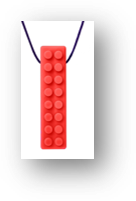
Chewelry
Safe, wearable, discreet and cool options for people who need to chew. Chewelry can be used as an oral fidget or a hand fidget to help calm, soothe and self-regulate, and is a safe alternative to chewing or biting fingers, knuckles, shirts or pencils. It comes in different levels of chewiness, from soft to extra firm, for mild, moderate, firm and rigid chewing. Available from sensory stores.



Temporary tattoos
Temporary tattoos can be a distraction from the urge to self-injure, while still marking your skin in a safe way. Choose bright designs, symbols or words that mean something to you, like a semicolon.


Urges are waves
They rise, they peak, and they pass
Urges are cravings, and everyone has them.
They can feel strong, like you have to act now, AND you can ride the wave until it passes.
Think of a mosquito bite: scratching makes it itch more. Leave it alone, and the itch fades.
Each time you ride an urge out, it gets easier. Over time, urges come less often and feel less intense.
Stressful times, like exams, arguments or a break-up, can bring stronger urges,
so be extra watchful and use your strategies early.


Keep riding them, and over time the waves get smaller.
Myths about self-injury
What's true, and what isn't
There are a lot of myths about self-injury. This short video dispels some of the most common ones.

What was happening just before the urge? Where was I, who was I with, and what was I feeling?
What coping skills could I try next time?
Notice your colourful days
Paper chain
Add a coloured link for each day you get through without self-injury, and write what helped on it. If there's a lapse, add a white link and keep going. White links are part of the chain, not a break in it.
My 4 P's
Recovery isn't a straight line
Lapses are part of recovery
Many people expect that once they start using new skills, the urge to self-injure will disappear for good. In reality, urges can return, sometimes years later and often in times of stress.
A lapse doesn't mean you've failed or that you're back at square one.
If you do have a lapse, try to be honest with someone you trust, and be kind to yourself.
Shame and guilt can restart the cycle; curiosity helps break it.
Ask yourself
Tracking your progress helps you see how far you've come, especially on hard days.
Pick one of these ideas and mark each day you get through without self-injuring.
If you have a lapse, there's no need to start again or throw anything away.
Add a white link, bead or dot, and keep going.
A lapse isn't a sign that you've failed or that you're weak;
it's information about what you needed in that moment.
Try to meet it with curiosity and kindness rather than shame,
because shame and guilt can make the next urge stronger.
Skills take time to build, and urges don't disappear overnight.
These four P's are what carry you through the hard days and the lapses:
Practice your skills, even when you're calm.
Be Patient with yourself.
Keep going with Persistence.
And when it gets tough, Persevere.
Lapses happen, and that's okay.
Recovery from self-injury is rarely a straight line.
There will be lapses along the way, and they don't erase how far you've come.
If one happens, be kind to yourself, use your skills, and keep going.
Look back at your colourful days: what helped? That's your toolbox growing.
What early warning signs did I notice in my body or my thoughts?
Who could I reach out to next time, and how would I let them know?

Beads
Add a coloured bead for each day. String them into a bracelet or necklace, or fill a jar and watch it grow. If there's a lapse, add a white or clear bead and keep going.
What did I try, and what helped, even a little?
How was this time different from last time?
Paper tracker
Colour in a dot for each day. If there's a lapse, leave it white and keep going.
Adapted from The New Happy (@newhappyco)
Which strategies, skills or distractions didn't work this time?
What can I be proud of, even in a tough moment?
A harlequin tuskfish breaking open a clam. Footage: BBC, The Blue Planet.
Meet Harley, my spirit animal 😉
Harley the harlequin tuskfish is tenacious. He swims a long way to find his dinner, then works patiently to crack open a clam by bashing it against a rock. He drops it. He picks it up and tries again. And again. He doesn't give up until it opens.
In a world of instant everything, Harley is a great reminder: the first tool or strategy you try might not work. Try something else, and keep trying until you find what does. Then remember it.
Over time you'll fill your toolbox with distress tolerance skills that work uniquely for you, until they become your steady, go-to ways of coping.
That's the 4 P's in action: Practice, Patience, Persistence and Perseverance.
Practice
Patience
Persistence
Perseverance
Helpful apps
(Apps I recommend, plus tips for choosing your own)
📱 Choosing a mental health app
● Look for apps backed by research, from a trusted developer such as a university, health service or helpline. For example, MoodMission was developed at Monash University and tested in a randomised controlled trial.
● A high star rating isn't the same as good quality. Only a small proportion of mental health apps have been properly tested.
● Check privacy: what data it collects, and who it's shared with.
● Be careful with apps where strangers can post messages, as other people's posts can be upsetting or unsafe.
● Be careful with streak or days clean counters (like I Am Sober). They're designed for addiction recovery, and resetting to zero after a lapse can feel like failure. A lapse doesn't erase your progress.
● Check it suits your age, and whether it's free or has hidden costs.
● Try it yourself, and keep what helps.
● Therapeutic apps work best alongside a mental health professional.
Calm Harm
Helps you ride out the urge to self-injure. By stem4, a UK teen mental health charity. May cost a small fee in Australia.


Headspace
Guided meditation, sleep and mindfulness (the meditation app, not headspace Australia).

Beyond Now
Build your own safety plan to use when things get tough. Free, from Lifeline Australia.



MOST by Orygen
Free online mental health support for young Australians aged 12 to 25 (12 to 14 by invite from headspace or a specialist service).


More helpful resources
(Hand-picked, Australian where possible. Click any link below to visit the site.)
For young people
Calm Harm app →: an app from stem4 to help you ride out urges.
headspace: Self-harm, what you need to know →.
Beyond Now safety planning app →.
Kids Helpline: Self-harm, what it is and who can help →.
ReachOut: Ask a therapist, understanding self-harm →.
Lifeline Support Toolkit: Self-harm →.
For parents and carers
Coping with self-harm: a guide for parents and carers, Orygen, free →.
headspace: Supporting a young person who self-harms →.
Healing Self-Injury: A compassionate guide for parents and other loved ones, by Whitlock and Lloyd-Richardson (2019).
Raising Children Network: Self-harm and teens →.
Kids Helpline: Self-harm explained, for parents →.
ReachOut Parents: Self-harm and teenagers →.
I don't receive any payment or endorsement from the organisations or products on this page.